
magazine of perfumery art

by Nose Anatomy
Apr 20, 2026
Where handcrafted glass, memory, and high perfumery converge into a singular artistic language
There are perfume houses that compose fragrances, and there are those that construct a complete artistic language. Majda Bekkali belongs unmistakably to the latter.
Founded in 2009, the house reflects the personal and cultural duality of its creator - born in Fez into a noble Moroccan family and later shaped by Paris through studies in art history and creative direction within the fragrance industry. This intersection of origins defines the brand’s identity: a dialogue between Oriental depth and European refinement, translated into a perfumery that is both conceptual and deeply material.
At the center of Majda Bekkali lies not only scent, but form.
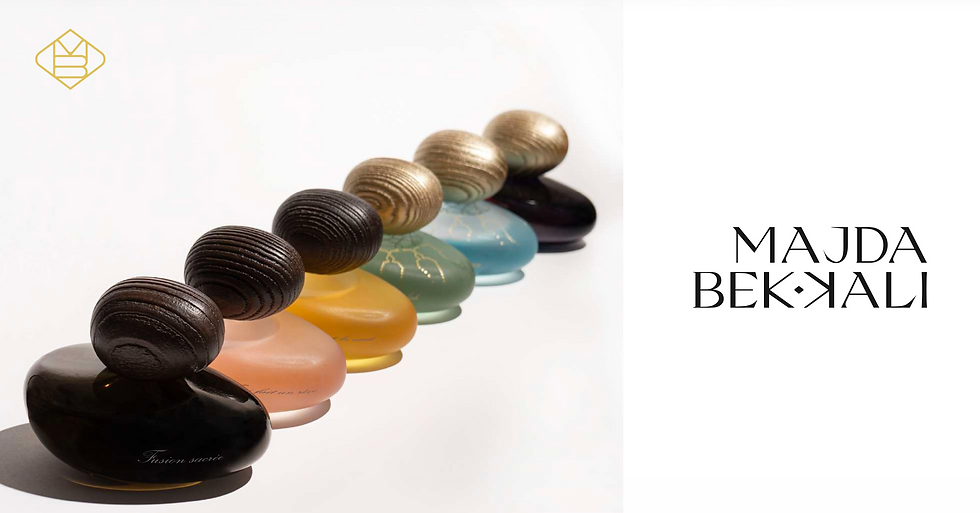
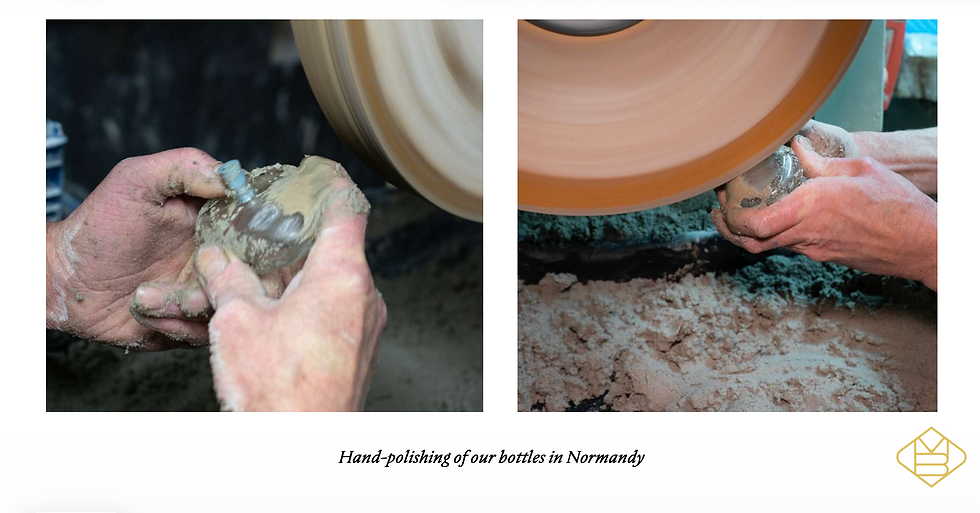
The brand’s signature flacon - often referred to as the “pebble bottle” - is one of the most distinctive objects in contemporary niche perfumery. Entirely shaped by hand, it cannot be produced through industrial automation. Each piece passes through multiple ateliers before reaching its final state, where it is hand-polished to achieve a surface that recalls a stone softened by water over time. The result is tactile, organic, and deliberately imperfect - each bottle exists as a singular object rather than a standardized product.
This attention to materiality extends to every detail. The caps, crafted from natural wood, reinforce a sense of authenticity and connection to raw elements. The object is not designed merely to contain fragrance, but to embody it.
This philosophy is grounded in three core principles: encounters, art, and the hand of man. The brand does not follow seasonal cycles or market-driven trends. It does not produce in volume or seek rapid expansion. Instead, it operates through a slower rhythm, where each creation is conceived as a complete work - composition, concentration, and object forming a unified whole.
The fragrances themselves are exclusively produced as highly concentrated perfume extracts, typically ranging between 20% and 30%. This choice reflects a commitment to depth, longevity, and intensity of expression. There are no lighter formats, no diluted interpretations - only compositions that aim to fully express their conceptual intent.
Developed in collaboration with respected perfumers, the scents are built using a high proportion of rare and noble raw materials. Across the collection, Atlas cedar appears as a recurring structural element, functioning almost as a signature. More than an ingredient, it serves as a memory - a reference to the founder’s childhood in Morocco, where cedar wood formed part of her architectural and emotional environment.
Each fragrance unfolds as a narrative. Rather than following conventional olfactory categories, the compositions are often structured around contrasts - light and shadow, clarity and obscurity, tension and resolution. This duality is not only expressed through scent but also through language, with poetic texts accompanying many creations, positioning perfume as a medium of thought as much as sensation.
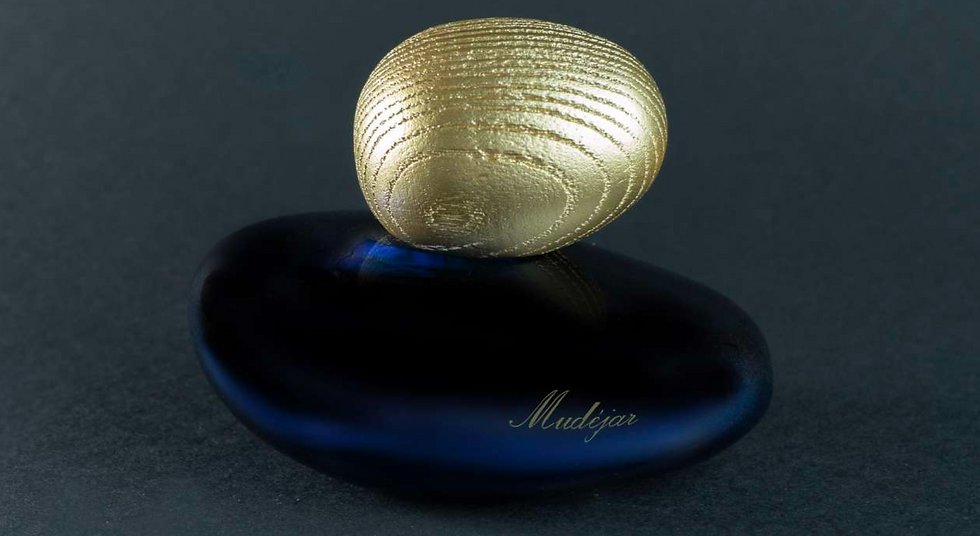
Cultural references further enrich this universe. Inspirations drawn from places such as Toledo - historically marked by the coexistence of multiple cultures - or from artistic movements like Mudéjar, reveal a deeper intention: to explore harmony through contrast, and to transform historical and symbolic material into olfactory form.
The brand extends this approach beyond perfume into objects for the living space, including candles that maintain the same level of concentration and artistic direction. Here, scent becomes atmospheric, shaping not only the body but the environment, reinforcing the idea that fragrance is inseparable from experience.
Majda Bekkali occupies a singular position within contemporary perfumery. It does not seek to compete through visibility or volume, but through coherence and depth. In a landscape often driven by acceleration and repetition, the house insists on time, craftsmanship, and meaning.
What emerges is not simply a collection of fragrances, but a system of objects and ideas — where perfume is not only worn, but held, contemplated, and understood.